What Is a Material Submittal in Construction?
A material submittal is a formal package of product data, samples, test reports or drawings that a contractor sends to the consultant for review and approval before ordering or installing a material or system. It shows that what will be built matches the specification and design intent.
What is a submittal in construction?
Submittals are how the design team confirms, before purchase, that the contractor's choice of materials and equipment meets the specification. Common types are product data sheets, material samples, mock-ups, test certificates, shop drawings and method statements. A transmittal is the cover sheet that lists what is being sent, to whom, and in which revision.
Purpose of the submittal process
Submittals protect both sides:
- The consultant checks compliance before money is spent on the wrong product.
- The contractor gets written approval, which supports the purchase order and the later claim that the work follows the approved design.
- The project keeps a record of exactly which product, make and revision was approved.
How to prepare a material submittal
A submittal gets through review faster when it is complete and traceable:
- Give it a unique number and a revision, and refer to the specification section it responds to.
- Include the data sheet, test certificates, samples and the compliance statement that matches the specification line by line.
- Attach the transmittal listing every document and its revision, with the date and the required return date.
- Check it internally before sending, so the consultant does not receive an incomplete package.
- Track the response and resubmit promptly if comments require it. Do not order against a submittal that has not been approved.
Submittal review statuses
Projects define their own codes, but common outcomes are: approved; approved as noted (proceed with the comments applied); revise and resubmit; and rejected. The status and its meaning should be in the project's submittal procedure.
Submittals on Gulf projects
Gulf specifications usually require consultant approval of materials before delivery to site, and many contracts require a submittal register or schedule early in the project. Material approval requests are often abbreviated as MAR, and some projects number them by discipline.
Authority approvals, such as municipal or civil defence approvals for certain systems, are separate from consultant submittals and run on their own timeline.
How Arkan handles submittals
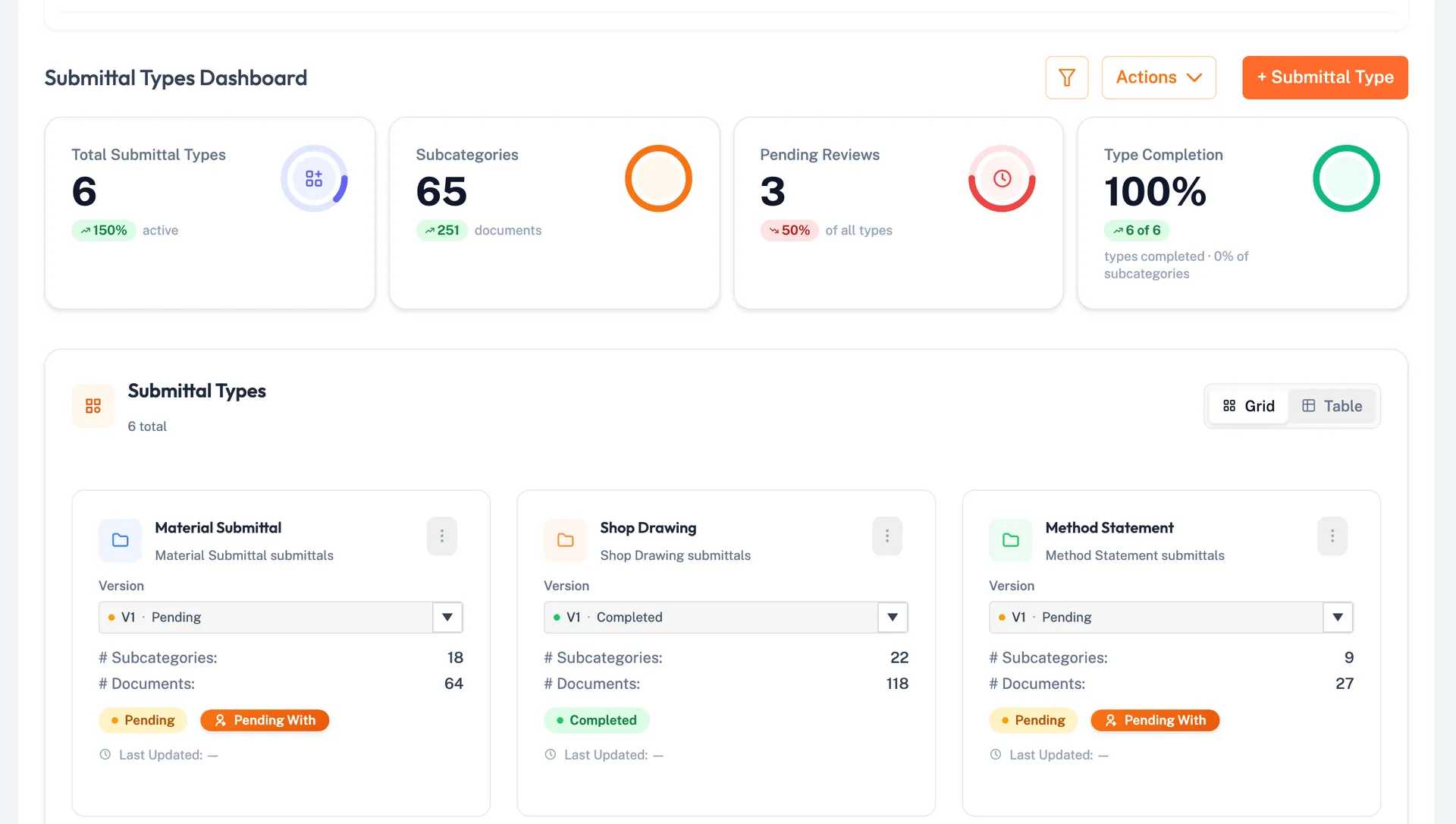
Arkan's Submittals module organises submittals into types and plans, then tracks each document request through its approval workflow.
- Define submittal types and create a submittal plan, including from a Primavera schedule.
- Raise document requests with documents and checklists, and move them through workflow actions.
- Use the follow-up dashboard and follow-up requests grid to see what is overdue, with Excel export.
- Generate PDF reports and see KPI cards and charts on the submittals dashboard.
Frequently asked questions
What is the difference between a submittal and a transmittal?
A submittal is the content being sent for approval, such as a data sheet or sample. A transmittal is the cover document that records what was sent, when, to whom and in which revision. One transmittal can carry several submittals.
What is the difference between a submittal and an RFI?
A submittal asks for approval of a proposed material, product or drawing. An RFI asks a question about the design or contract documents. A submittal receives a status; an RFI receives an answer.
What does 'approved as noted' mean?
It generally means the item is accepted on condition that the reviewer's comments are applied. It does not mean the comments can be ignored. Check your project's submittal procedure, because status wording differs between projects.
How long does submittal review take?
The contract or specification sets the review period. Plan submittals early so review time and lead time for ordering do not delay the activity that needs the material.
Related terms
Read next
Last updated: 2026-10-13. Definitions are general guidance. Your contract and project procedures govern.