What Is an Extension of Time (EOT) in Construction?
An Extension of Time (EOT) is an adjustment that extends the contract's time for completion when a delay is caused by an event the contract treats as the employer's risk or as neutral. It protects the contractor from liquidated damages for the extended period and keeps the completion date achievable.
What delays qualify for an EOT?
Entitlement depends on the contract. Typical grounds include variations, late access or late information from the employer, exceptional weather and other events listed in the conditions. Delays that are the contractor's own responsibility do not qualify, and a delay normally has to affect the critical path to justify more time.
How an EOT claim is made
Procedures are strict, and missing a notice period can weaken a claim. A usual sequence is:
- Give notice of the delay event within the time limit stated in the contract.
- Keep contemporaneous records: daily reports, correspondence, photographs and updated programmes.
- Submit a fully detailed claim showing the cause, the effect on the programme and the days requested.
- The engineer or employer's representative assesses and determines the extension.
EOT, prolongation cost and liquidated damages
Time and money are separate. An EOT gives more time, and the contract may also allow extra cost for prolongation if the cause was the employer's risk. If no EOT is granted and the contractor finishes late, liquidated damages can apply. Our extension of time calculator helps you test the days and the exposure.
EOT on Gulf projects
Gulf contracts frequently follow FIDIC-style time-bar provisions where notice and detailed particulars must be given within stated periods. The Society of Construction Law Delay and Disruption Protocol is widely referred to for analysis methods, but each contract decides what is acceptable, so check the notice periods and programme requirements in yours.
How Arkan supports extension of time records
Arkan does not assess or approve EOT claims. It keeps the programme and the site evidence that a claim relies on.
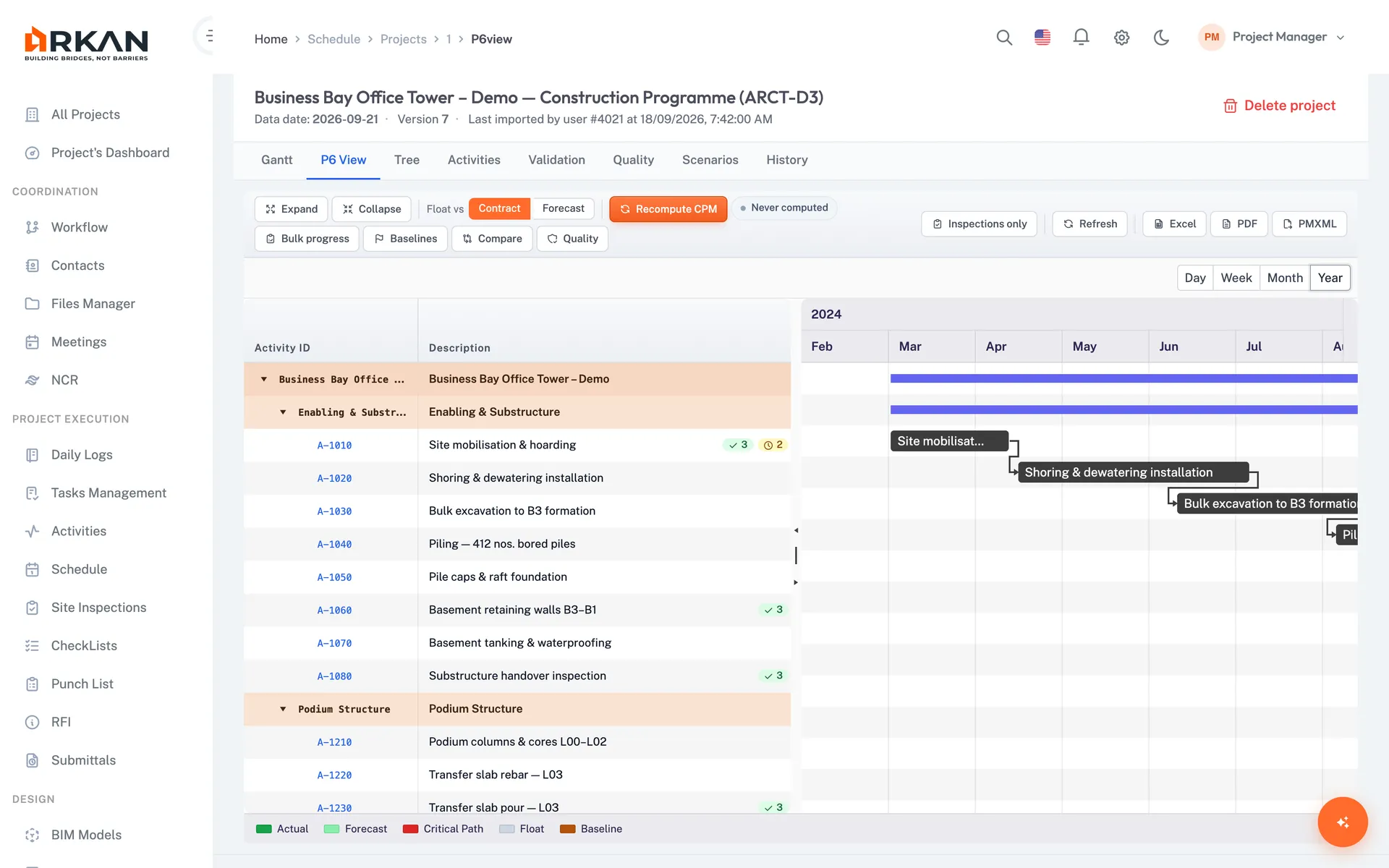
- Upload Primavera P6 files (.xml or .xer), view activities in Grid and Gantt and compare two schedule versions.
- The CPM analysis card shows the expected project end date and critical-path activity counts.
- Daily Logs record manpower, equipment, materials and safety each day with a Draft, Submitted, Approved workflow.
Frequently asked questions
What does EOT mean in construction?
EOT stands for Extension of Time: extra days added to the contract completion date because of a qualifying delay.
Does an EOT mean extra payment?
Not automatically. Some delay events give time only; others also give prolongation cost. The contract states which.
What evidence supports an EOT claim?
A timely notice, updated programmes showing the effect on the critical path, daily records, correspondence and instructions that show the cause and the dates.
What happens if the notice is late?
Many contracts treat late notice as a bar or reduction to the claim. Check the exact wording and seek advice early.
Related terms
Related calculators
Read next
Last updated: 2026-10-14. Definitions are general guidance. Your contract and project procedures govern.