What Is a Variation Order (VO) in Construction?
A Variation Order (VO) is a formal instruction or agreement that changes the scope, quantity, quality or timing of work in a construction contract. It records what is added, omitted or altered, its effect on cost and time, and the approval needed before the change is carried out and paid.
What is a variation order in construction?
No project is built exactly as tendered. Design development, client requests, site conditions or errors in the documents lead to changes. A variation order is how the contract captures such a change in writing, so it can be valued and paid and so the time effect is agreed. 'Change order' is the usual North American term; 'variation order' or 'variation' is common in FIDIC-based and UK-style contracts.
Purpose of a variation order
A VO exists to avoid disputes at the end of the project:
- It authorises the extra or changed work so the contractor is not building without instruction.
- It fixes the price and any time adjustment before or soon after the work is done.
- It creates the evidence used when the payment application includes the variation.
How to prepare a variation order
Contract rules differ, but a sound VO usually covers:
- A number, date, project and the instruction or event that caused the change.
- A description of the work added, omitted or changed, with drawing or specification references.
- A valuation: quantities and rates, taken from the BOQ rates where applicable, or agreed day-work or new rates.
- Any effect on the programme, with the extension of time requested if relevant.
- Signatures or approvals by the parties the contract names, and a record of when each was given.
Variation order example
Example: the client asks for an additional 120 m2 of raised access flooring in a server room. The VO states the instruction reference, the added quantity, the rate (from the BOQ or newly agreed), the total, and whether the programme changes. Our free variation order template provides the fields and totals.
Variation orders on Gulf projects
Many Gulf contracts are based on FIDIC conditions, where the engineer can instruct variations and the contractor is entitled to valuation, and the variations clause (Clause 13 in the 1999 and 2017 Red and Yellow Books) sets the procedure. Contractors must also follow the contract's notice requirements for claims and time. Missing a notice period can affect entitlement, so check the clause wording.
Employers frequently amend the standard FIDIC text with particular conditions, so the procedure on your project may differ.
How Arkan handles variations
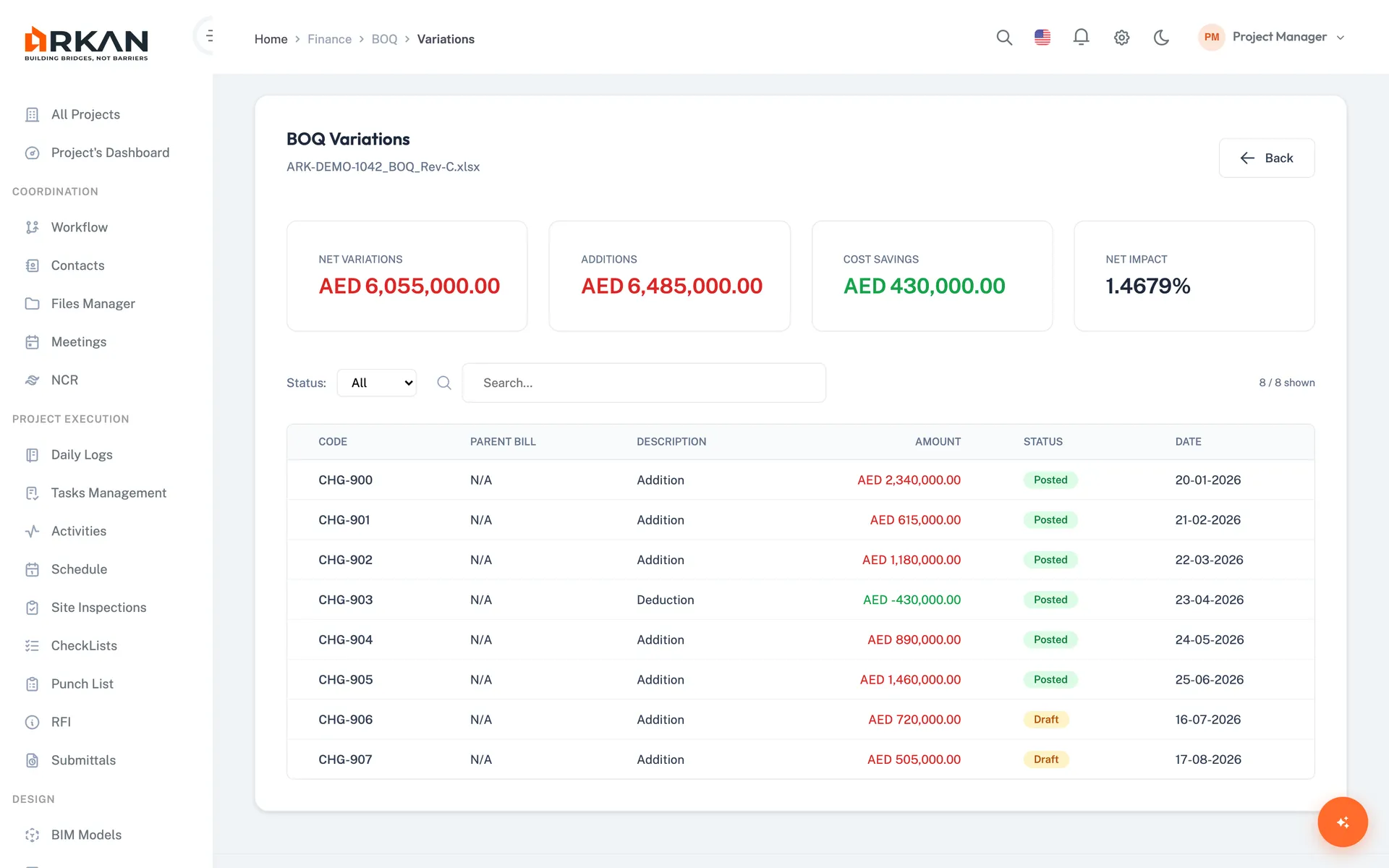
Arkan records variations against the BOQ item they change, rather than in a separate spreadsheet.
- Add a variation on a BOQ item with description, type, quantity and unit rate; the value is calculated automatically and starts as Pending.
- Use bulk actions on the variations table, and see value impact and approval status per item.
- Variations feed the finance dashboard's variations overview and the payment request's variation figures.
- Arkan does not decide entitlement or time-bar compliance; those stay with your contract team.
Frequently asked questions
What is the difference between a variation order and a change order?
They are the same concept under different names. 'Change order' is the common US term, and 'variation order' is common in FIDIC and UK-style contracts. Some contracts distinguish between an instruction and a priced order, so follow your contract's wording.
Who can issue a variation order?
It depends on the contract. Under FIDIC conditions the engineer instructs variations, and the employer may need to approve them if the amount or kind requires it. The contractor should check who has authority before carrying out the work.
How is a variation valued?
Usually by applying BOQ rates where the work is similar, by adjusting those rates where conditions differ, or by agreeing new rates or day-work. The contract states the order of preference.
Can the contractor start work before the VO is signed?
That carries risk. Without a written instruction or agreed variation, the contractor may find it hard to recover the cost. Where urgency demands it, record an instruction in writing first and follow up with the formal VO.
Related terms
Related calculators
Read next
Last updated: 2026-10-13. Definitions are general guidance. Your contract and project procedures govern.