What Is a Snag List in Construction?
A snag list, also called a punch list, is a written list of defects, incomplete work and minor faults found when inspecting a building or area before handover. Each item records the location, description and who must fix it, and is tracked until it is corrected and accepted.
What is snagging in construction?
Snagging is the walk-through inspection that produces the list. Inspectors go room by room and record anything not finished or not to specification: paint marks, damaged tiles, doors that do not close, missing sockets, unsealed joints. The term 'snag list' is common in the UK and Gulf; 'punch list' is the usual term in North America. They mean the same thing.
Purpose of a snag list
The list gives everyone one agreed view of what remains before handover:
- The contractor knows exactly what to fix and where.
- The client or consultant can check each item and accept it, instead of re-inspecting everything.
- It supports agreeing completion, and often the release of part of the payment, once items are cleared.
How to prepare a snag list
A snag list is only useful if each item can be found and fixed:
- Number every item and give an exact location (building, floor, room or gridline).
- Describe the defect in plain words and add a photo.
- Assign it to the responsible trade or subcontractor and set a target date.
- Record the date fixed, who verified it and the final status. Do not close an item without checking it.
- Re-inspect and add new items found later in a new dated round, so the history stays clear.
Snag list example
Example items: 'Level 3, Apartment 304, living room: paint patch visible on east wall, repaint (Painter, due in 3 days)'; 'Level 3, corridor: damaged floor tile at lift lobby, replace'. Our free snag list template provides the columns for number, location, description, trade, priority, dates and status.
Snagging on Gulf projects
In the Gulf, snagging usually happens in stages before handover to the developer or end owner, and again by the owner or buyer's own inspector in residential projects. Contracts commonly link completion and a defects period (called the Defects Liability Period or Defects Notification Period in FIDIC forms) to snags being cleared.
The exact consequences of an open snag depend on the contract.
How Arkan handles snag lists
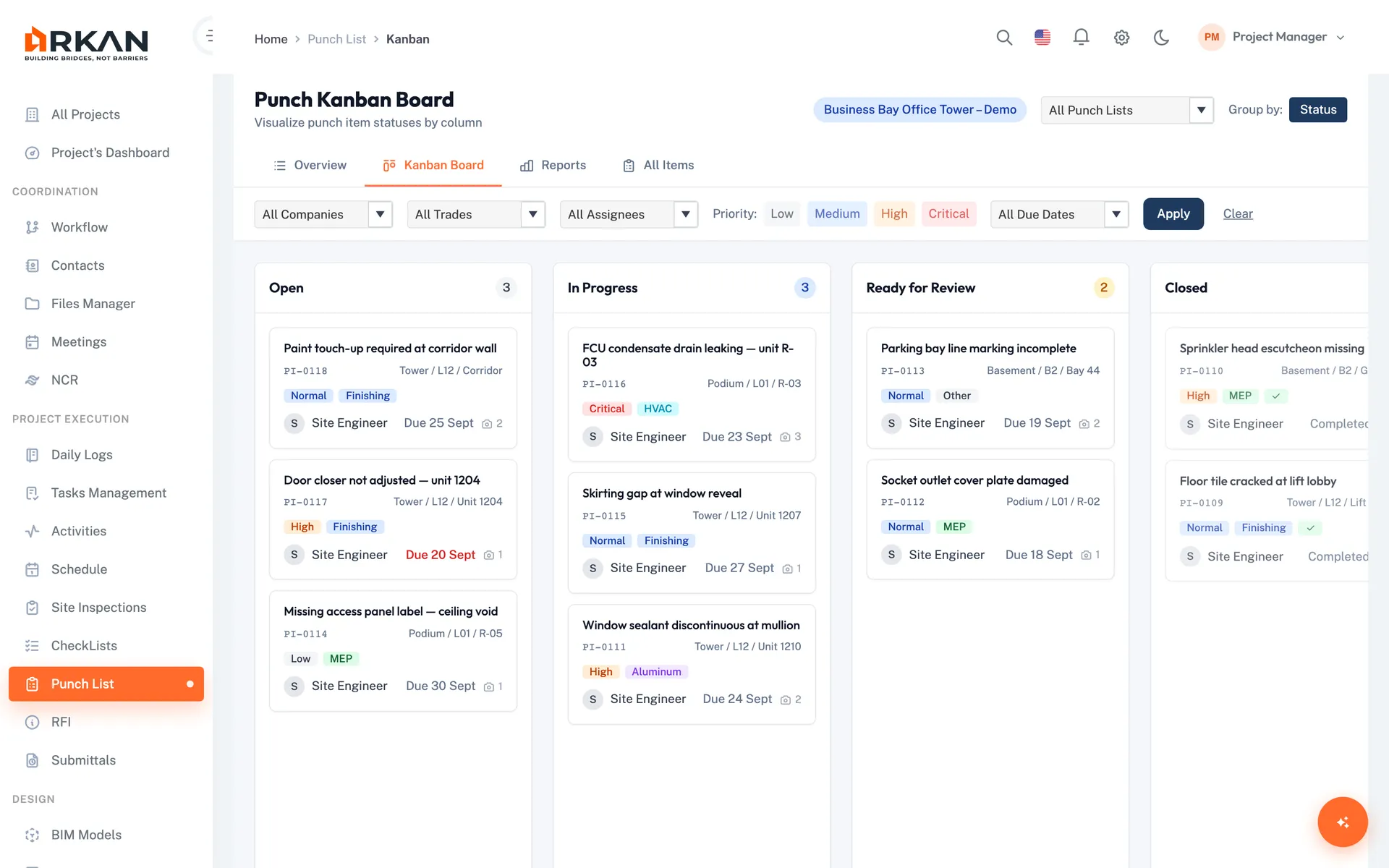
Arkan's Punch List module is the digital version of the snag list, with the same photo-and-location habit but a full history for each item.
- Create punch lists and items with priority, assignee, photos and attachments.
- Move items through Draft, Open, In Progress, Resolved and Closed; each change is recorded in the item's timeline.
- Work from a grid, a Kanban board with drag and drop, or the reports view.
- Export reports to CSV or PDF. A closed item cannot be reopened, so verify before closing.
Frequently asked questions
What is the difference between a snag list and a punch list?
There is no practical difference. 'Snag list' is the common term in the UK and much of the Gulf; 'punch list' is the common term in North America. Both list defects and unfinished work found at completion.
When is a snag list prepared?
Typically near practical completion, before handover. Larger projects snag in rounds, area by area, so that fixing can run alongside completion of other areas.
Who is responsible for fixing snags?
The contractor, who normally passes each item to the responsible subcontractor or trade. The client or consultant verifies the fix before the item is closed.
Is there a free snag list template?
Yes. We publish a generic snag list template in Excel and PDF in English and Arabic with columns for location, description, trade, priority, dates and status.
Related terms
Read next
Last updated: 2026-10-13. Definitions are general guidance. Your contract and project procedures govern.